
On Friday, the 15th of May, two news items ran on the same page.
The first: NEET-UG 2026, taken by over two million children, stood cancelled. Around 120 of approximately 410 questions had surfaced in a “guess paper” circulating before the examination.
The second: in the Supreme Court, the Chief Justice of India, hearing a contempt matter, described unemployed young lawyers drifting to social media and RTI activism as “youngsters like cockroaches” — parasites, in his words.
Read together, those two headlines tell you almost everything that is wrong with what we have built for our young.
The Exam Factory
Look at what an Indian seventeen-year-old must clear before life can begin. Class 10. Class 12. Then NEET, or JEE Main and Advanced, or CLAT, or CUET. State CETs on top. Private university tests on top of that. Four to six high-stakes exams in twenty-four months.
A coaching economy in Kota and Hyderabad has grown up to service the anxiety. Families mortgage homes. Children stop reading, stop playing, stop talking to their parents about anything that is not a rank. We have stopped noticing how strange this is.
The Real Cost
The entrance exam was once a good idea, a common yardstick for varying boards and limited seats. But the system did not stay true to that intent. What we call merit is, honestly, the merit of who could afford coaching.
One paper, one morning, decides between AIIMS Delhi and a private college costing two crore more. When that much rides on a single paper, leaks are not accidents. They are the architecture working as designed. NEET 2015, 2024, 2026, Vyapam, SSC. The pattern repeats because the incentive repeats.
And the real cost is the one no one puts on a balance sheet: Kota suicides, mental health collapse, two formative years of a young life spent in permanent examination.
A Lawyer’s Question
If CUET decides undergraduate admission, what does the Class 12 board do? If NEET decides medical admission entirely, what does the Class 12 science board do? Two parallel high-stakes regimes, neither talking to the other.
In a well-drafted contract, when two clauses do the same job, one of them is dead weight. We must delete one.
Pick One, and Take it to the States
The country must choose. Either make the Class 12 board the real gateway, standardised nationally, with a short subject-aptitude layer on top, and abolish the parallel entrance industry. Or keep the entrance as the gateway and reduce Class 10 and 12 to pass-fail qualifying certificates.
Running both is duplication, paid for in the mental health of a generation.
But the larger point is this: whichever we pick, stop running it from Delhi. India is 140 crore people, twenty-eight states, twenty-two languages. You cannot herd two crore children into one examination on one morning across this geography and expect it to hold.
One leak in Rajasthan and every child in Tamil Nadu is back to square one. The United States runs its bar and medical licensing state by state under a common national framework. So can we.
Let each state conduct NEET, JEE, CLAT and CUET under uniform standards set by the NMC, AICTE, BCI and UGC. Local conduct, local accountability. The black holes shrink to the size of a state, not a country.
A Word to the Young, and Their Parents
While the government does its job, please do yours. Of the twenty-two lakh children who sat for NEET, a large number will not become doctors. The seats simply do not exist. But the harder truth is that many were never meant to be doctors at all. They were pushed into the only corridor the family knew.
Look honestly at the child at your dining table. Some are meant to be artists, filmmakers, chefs, photographers, designers, educators, writers, sportspersons. And given the world AI is opening up, AI trainers, prompt engineers, robotics specialists, climate scientists, UX researchers, digital health workers, creator-economy entrepreneurs. Half the meaningful work twenty years from now will be in fields that do not yet have names.
To parents: step out of the old script. Stop being only the parent who sets the timetable and monitors the marks. Become your child’s friend first. Listen, without interrogating. Stand by them when they fail. A child who knows home is a safe place walks into the world with a steadier step than any coaching factory can teach.
And to the young, there is no Plan A. There never was. Plan A was the dream somebody else handed you. Make your Plan B. And let Plan B be this, be yourself.
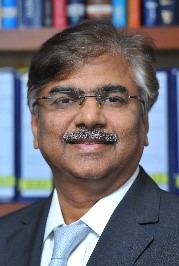
The author is a Senior Corporate & M&A Lawyer. Email: nitin@nitinpotdar.com